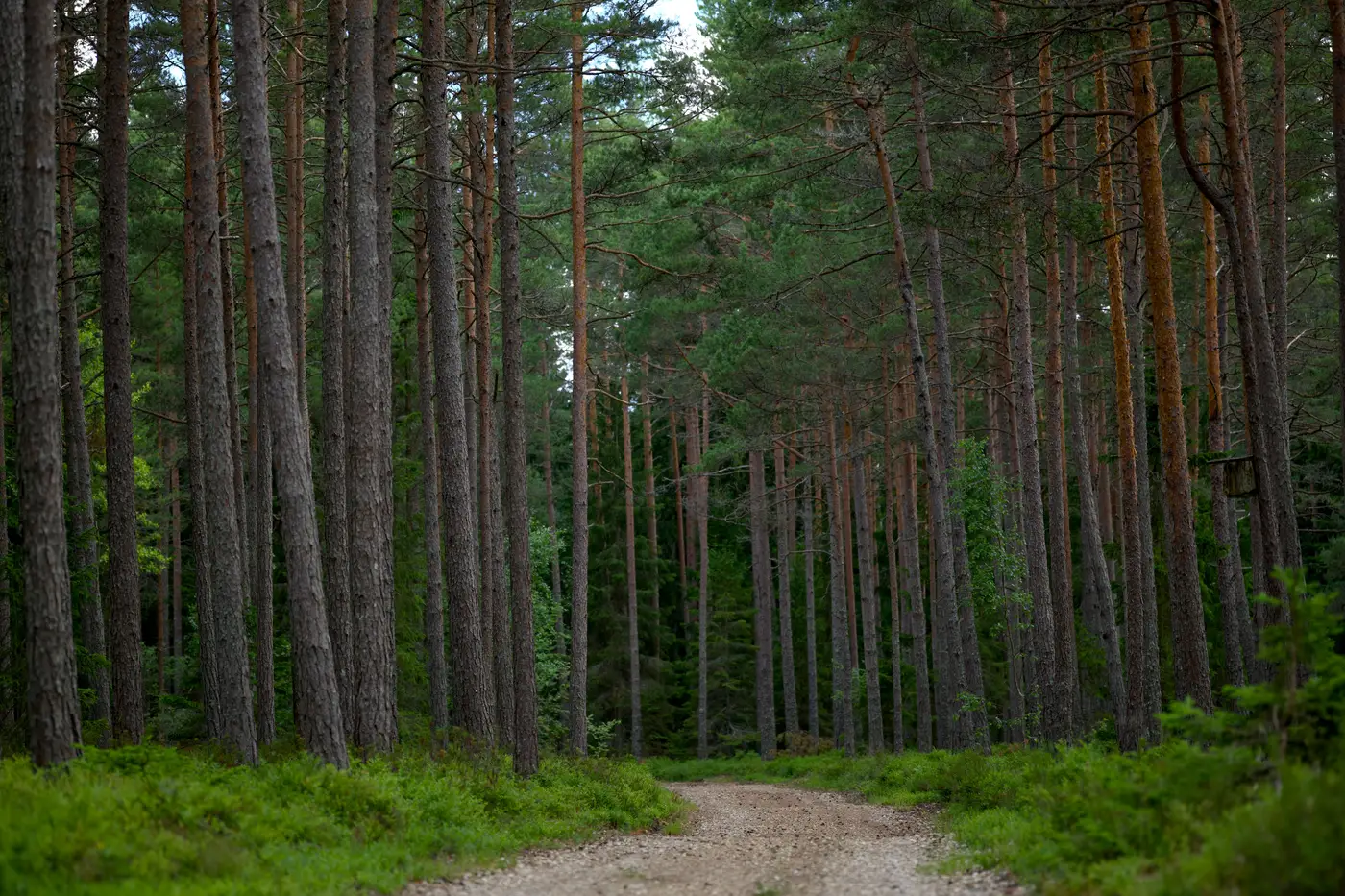
Earl's run cruise crews for longer than some of his crew members have been alive. He doesn't trust a number he hasn't put his own boots on. So when the crown count came back on an 80-acre Doug-fir stand slated for next spring, he did what Earl does: he grabbed his clinometer, his Biltmore stick, and a thermos, and walked three transects through the unit himself.
He wanted to know how wrong the count might be, if it was wrong at all, and in which direction.
He picked three spots that looked representative to his eye, the kind of judgment call a cruiser makes without thinking about it after forty seasons, and ran variable-radius plots at a 20 BAF. Tallied every tagged stem, cross-checked DBH against the crown diameters on the map, and did the arithmetic on the tailgate the way he's done it a thousand times. Three hours of walking blowdown and salal for a number he already had.
The plot averages landed inside a few percent of what the full-count map had flagged for those same acres. Not a perfect match, plots never are, that's the whole reason cruisers argue about expansion factors over coffee, but close enough that Earl stopped halfway through plot three and just stood there for a minute, chewing on it.
Here's what got him. A prism cruise tells you what's probably true across a stand, built from the assumption that a handful of well-chosen points can stand in for the whole. It's a good assumption, and it's been the industry's working one since before Earl's dad was cruising timber in this same drainage. But it's still an assumption, stacked on expansion factors, stacked on a cruiser's judgment about where to drop a plot.
The full-count map runs on a different premise. It counts what's actually there, crown by crown, across every acre instead of three spots on it, the same way Earl counts trees inside his plot radius.
That's not a small difference even when the numbers agree. When they agree, the plot cruise basically just told you it got lucky with its sample points. When they don't agree, you've got a real question on your hands about which number the cut estimate should ride on, and no way to settle it without walking the rest of the stand, which defeats the point of sampling in the first place.
Earl didn't say any of that to his crew. What he said, climbing back in the truck, was that the count "held up," and that they could skip the fourth plot he'd planned. That's about as close to a compliment as Earl gives a piece of software.
What stuck with him more, he told me later, was realizing how much of a cruise's value has always been less about the number and more about having walked it. Clients don't pay for a stem count, they pay for someone they trust to have seen the ground. A full-stand crown map doesn't replace that trust, it just changes what the walking is for. Earl still walked the stand. He just didn't need to walk the whole thing to sign off on the cut estimate, and the plots he did run were there to check a number, not to generate one from scratch.
If you want to see what a full-stand count looks like before you've committed a crew to the plots, the Tree Crown Mapping landing page lays out how the stem-level map gets built from a single pass over the unit. It won't walk the ground for you. But neither did Earl's three plots, really, not for the other 77 acres.
Next time a stand's on the schedule, check the crown count before you send a crew to sample it.