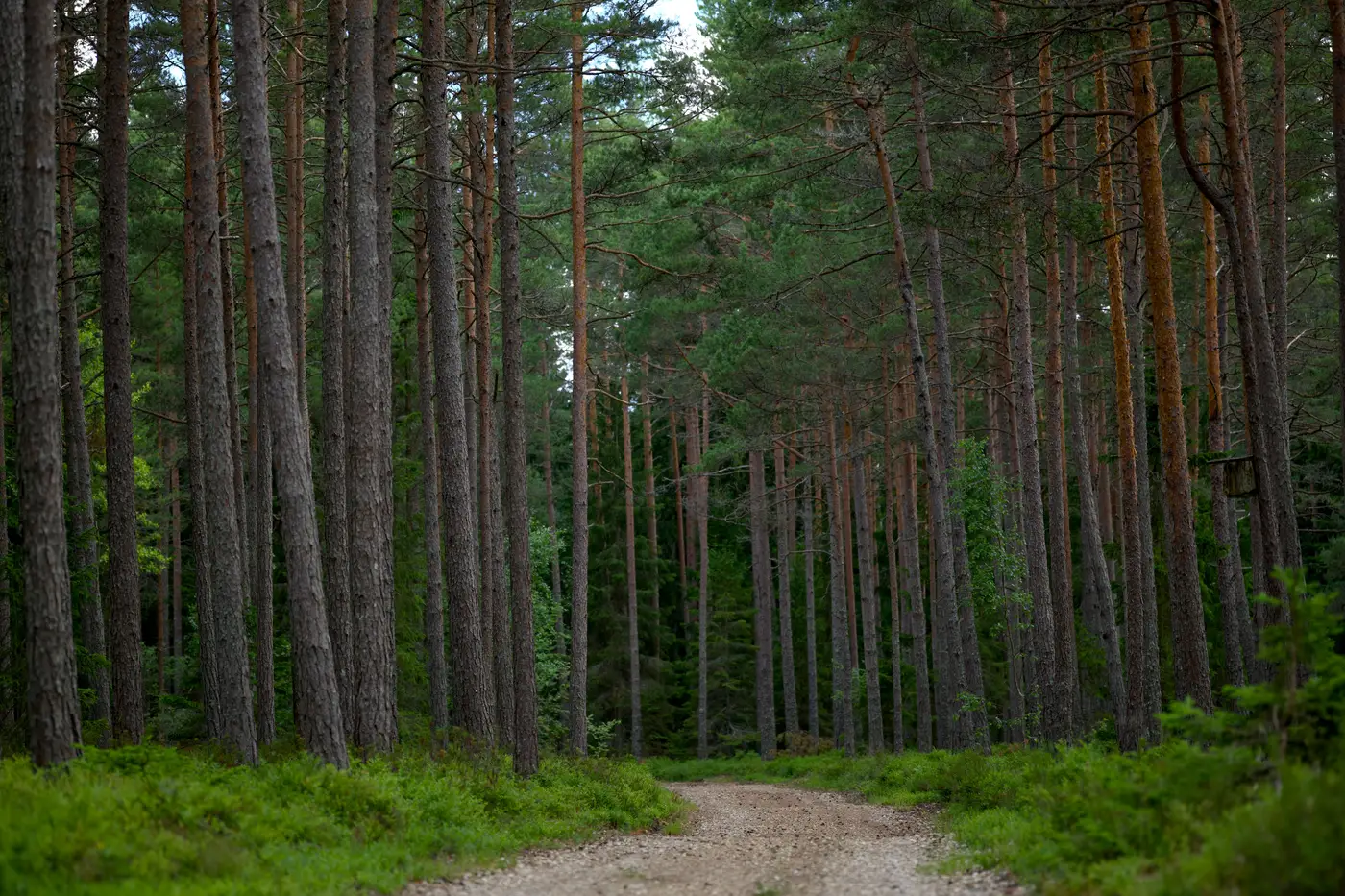
A cruiser asked us last month why we push an annual pass instead of flying every six months. Fair question. Most stands don't move fast enough to justify the extra flight, but some do, and knowing which kind you're managing is the actual skill here.
What changes a crown count year to year
Between two flights of the same stand, three things drive the difference in your count and your size distribution: growth, mortality, and disturbance. On a well-stocked pine plantation in year eight through fifteen, diameter growth shows up as crown width growth, and that's slow enough that a full year between flights barely moves the needle on your cut estimate. A single ice storm, on the other hand, can take out ten percent of your dominant crowns in one night and you won't know the real number until you fly again.
Mortality from beetle pressure is the trickiest case. Southern pine beetle and spruce budworm spread fast enough that an annual cadence can miss a spot infestation entirely, and by the time it shows up on your next scheduled flight the fade has already spread to the neighboring forties. Active beetle activity reported in the district is reason enough to move your reflight date up ahead of the calendar.
When once a year holds up
For most merchantable timberland on a normal rotation, once a year lines up with how foresters already think about the stand: you fly ahead of the growing season or right after leaf-off, get a full-stand crown count with per-tree size, and use it as the basis for whatever cut estimate you're building that year. There's no walking plots, no extrapolating a sampled transect across four hundred acres. You get an entry for every crown the pass picked up, at the resolution the flight was flown at.
A stand that's twenty years from rotation and showing no disease pressure doesn't need a second look mid-year. The crowns you counted in March are still roughly the crowns you'd count in September, just a little wider. Spending a flight on that stand instead of one with an open question is money that could've gone toward the acreage that actually needs it.
Reflight timing for a cut estimate
Where cadence really matters is the window right before you're building a cut estimate for a sale. If your last full-stand count is eighteen months old and you're about to put a tract out for bid, that gap is long enough that a buyer's cruiser could come in with a different stem count and you'd have no current data to argue the point. Time the reflight to land a few months ahead of whenever you expect to be building estimates, so the crown count is close to current when it matters most instead of whatever date the rotation happened to land on.
Same logic applies after a thin. A commercial thinning changes the crown canopy enough that your pre-thin count is no longer a useful basis for anything, and waiting a full year to see the new stand structure means you're flying blind on residual stocking for months you didn't need to.
Setting your own refresh interval
There's no universal number here, and anyone who gives you one without asking about your rotation length and disturbance history is guessing. Start from an annual pass as the default, then shorten the interval for stands with active mortality risk, recent silviculture, or an upcoming sale, and let the quieter acreage ride its normal schedule. If you want the stand-level detail to make that call without walking a single plot first, the full-stand crown map is built for exactly that decision.
Get in touch when you're ready to put a flight date on the calendar for your next stand.