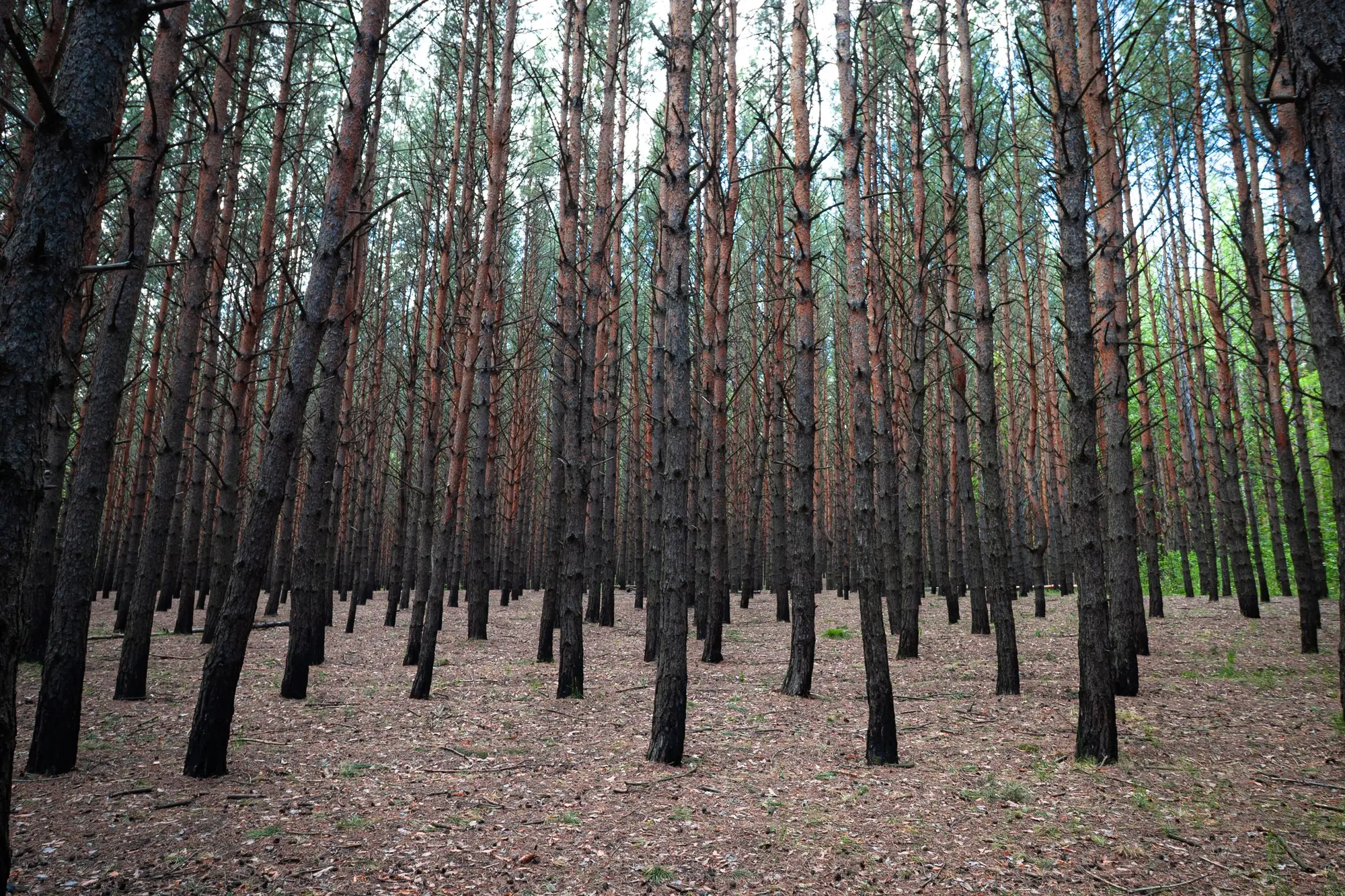
A client calls asking for a stand exam on the forty that got planted after the ice storm, then in the same breath asks what the cruise will cost on that same tract. Those are two different jobs. Billing them the same way, or worse, running one and handing over the other, is how a consulting outfit shortchanges a client who didn't know enough to ask the right question.
What a stand exam tells you
A forest stand examination is a condition check. You're walking fixed-radius or variable plots pulling stocking by species and size class, live crown ratio, regeneration counts, damage, mortality, sometimes site index. The output is a stand description and a set of recommendations: this stand needs a pre-commercial thin, that block is ready for a shelterwood cut, the plantation on the south slope has gaps that need interplanting next spring.
A timber stand exam definition that sticks: it answers what condition a stand is in and what silviculture it needs next. It doesn't tell you what the stand is worth if you cut it this winter.
What a cruise is for
A timber cruise exists to put a number on standing volume and value. Same basic sampling tool as an exam, plots scattered through the stand, but the tally is different. DBH, merchantable height, defect, product class, sawlog versus pulp versus chip-n-saw depending on the region. Run those plot numbers through volume equations and you get board feet or cords per acre, which becomes the basis for a cut estimate, a bid to a mill, or the number a landowner carries into a negotiation.
Nobody cruises a stand to find out if it needs thinning. Nobody runs a stand exam to set a stumpage price. The two jobs get confused because they look alike from the truck, a crew walking a plot grid with a prism and a clipboard, but the data sheet and the deliverable are built for different decisions.
Timing in the stand's life usually splits the same way. An exam gets run mid-rotation, sometimes more than once, to track how a stand is developing and flag when it needs intervention. A cruise gets run once, close to harvest, when somebody needs a number they can act on fast.
Both jobs share the same structural weakness, though: you never walk every tree. A ten percent cruise samples a fraction of the acres and multiplies up, and a stand exam does the same thing with its own plot grid. The per-acre averages hold up fine on a healthy, even-aged stand. They get shakier on a stand with patchy mortality, uneven regen, or a hardwood inclusion the plot grid happened to miss entirely, which is how a cruise and a reload three months later can come back with numbers far enough apart that somebody has to explain the gap to a landowner.
That's the part a full-stand crown count can close without putting more boots on the ground. Instead of sampling plots and extrapolating a per-acre figure, a stem-level crown map built from one drone or aircraft pass tallies every crown across the stand, one entry per tree, so the size and stocking numbers going into a cut estimate come from a count, not a sample. It won't replace the fieldwork a prescription depends on, cruise or exam, but it changes what the stem count behind a cut estimate is based on.
If you're tired of explaining why two sample-based numbers on the same tract don't match, it might be worth seeing what a full count looks like on your next stand.